The Stoa (stoa.uk)
"Putting Philosophy back in the marketplace!"
Hi there! You've arrived at the Stoa. We are a pub philosophy group meeting in Deal, Kent, UK. We meet on the first Wednesday of the month at the Landmark Centre 🔗 from 7.30pm to 9.00pm. Everyone welcome. Just bring your brains and some beer money!

Join our new Whatsapp group
The group has been set up so we can keep you up to date with what's happening on the Stoa and so you can comment on topics we've been discussing. If you haven't already got too many WhatsApp subscriptions click on the icon to join...

This month's recommended website
Alex O'Conner is a very successful Youtuber who runs a channel specialising in philosophy, He has interviewed a lot of the high profile people on the web like Christopher Hitchens, Bart Ehrman and Jordan Peterson. He takes an atheist line on religion but is sympathetic. He is also interested in Panpsychism, Republicanism, and Determinism. Definitely worth a watch. ❰More❱
We've moved
The Bohemian have decided they want to start using their upstairs bar, where we normally meet, for serving food, so we've had to move. We are grateful to the Landmark Centre 🔗 as they have agreed to let us use the Toft bar (on first floor) for meetings starting from October.
The meetings will still be free, as the Landmark are not charging us, but they have asked for a donation so we will be passing the hat around at each meeting. The Landmark is a community charity so they depend a lot on donations from voluntary groups like ours---so please give generously.
Upcoming meetings...
Wednesday 4 November 2026
"Humanism"
at the Landmark Centre, 19:30–21:00
Humanism is a philosophical and ethical outlook which places human beings, their well-being, freedom and capacity for reason at the centre of moral and intellectual life. It holds that human beings must seek meaning, knowledge and moral direction through reason, evidence, experience and reflection rather than though commands from a supernatural authority.
But is humanism necessarily opposed to all religion or is there a way of reconciling them? Do Humanists worship humanity or have faith in the Human spirit? Isn't that a bit naive in the modern world? More to the point: do they have faith in anything at all? And how is it possible without the a supernatural basis to find meaning and purpose in life? Can a Humanist be happy and hopeful or is Humanism a stark and pessimistic philosophy despite its claim to be optimistic? Lots to talk about.
Our discussion will be led by Steve Bowen who is a member of Humanism UK and regularly speaks in school RE classes about Humanism as non-religious life-stances are now included in the curriculum. ❰More❱
Wednesday 2 December 2026
"The Paranormal"
at the Landmark Centre, 19:30–21:00
Paranormal phenomena, parapsychology, psychical research: all these terms refer to the study of anomalous or supernatural phenomena for which we have no natural explanation. While conventional science examines and tries to explain empirical phenomena that we have good evidence for, parapsychology tries to establish the reality of its phenomena by finding evidence. Here's a glossary of the kinds of things parapsychologists try to study. So are these phenomena real or the products of trickery or self-delusion?
Our discussion will be led by Chris Bratcher who has been on the committee of the Society for Psychical Research, has written a number of papers, and has also been involved in practical research. So some expertise will be brought to our discussion. ❰More❱
Wednesday 06 January 2027
Multiculturalism
at the Landmark Centre, 19:30–21:00
It's an obvious fact that we live in a society today that encompasses many cultures. But would it make for a more cohesive society if we submerged our diversity and were more 'mono-cultural'? The sociologist Robert Putnam, an American liberal was dismayed to find that trust declines in diverse societies---not only trust between communities but also within one's own community. However, he does not think that is the end of the story and that multiculturalism can be made to work.
Where we meet
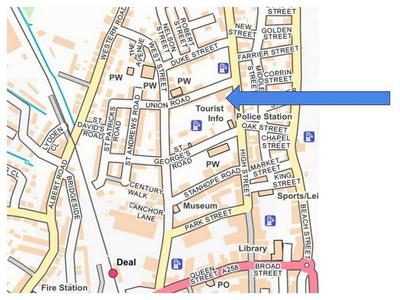
We meet at the Landmark Centre from 7:30pm to 9.00pm on the 1st Wednesday of every Month. 129 High Street Deal, CT14 6BB
What is the Stoa?
The Stoa is essentially a conversation and discussion group and NOT a lecture series, course or reading group. We put up some reading each month on this website but this is just for interest. Feel free to browse but don't feel an obligation to read any of the stuff. Just come along to the topics that interest you. You don't have to be prepared on any of the topics or to have studied philosophy before.
Meetings are always introduced by a member in order to kick-off discussion and you are welcome to interject at any point. However, the Chair tries to keep the discussion on track and to ensure everyone gets equal air-time!
Everyone is welcome and all opinions, however heretical, are tolerated. You just have to give REASONS for your opinions. We only ban dogmatism.
We discuss a wide range of subjects, not just formal philosophical topics. See this page of our past, possible, upcoming topics... ❰Topics❱
If you have anything you would like us to discuss just drop us an email.
Why the 'Stoa'?
It's not an acronym, as people often think, but a reference to the Stoa Poikile, the covered portico in the ancient Athenian market-place. It was here that philosophers used to meet to chew the fat over their various and conflicting theories of Life, the Universe and Everything.
The famous Stoic sages of antiquity got their name from their practice of meeting under the Stoa and not because of anything to do with their school of thought. We like to think of ourselves continuing in the same tradition of doing philosophy in the marketplace like those ancient Greeks, rather than in the 'ivory tower' of academe. However, in our case it's in the pub rather than in the marketplace and we are not Stoics as such, we just meet in the Stoa.
A previous version of the Stoa ran for over 12 years in Faversham and owing to several folk expressing an interest we thought we'd give it a try here in Deal too.
How can I contact the Stoa?
You can contact us at: east.kent.stoa@gmail.com
Or you can use our Whatsapp group. Click ❰Here❱ to join.
Interesting Stuff
The QI page is for Quite Interesting material that's not included in our main topics.
Also... Take a look at my Florilegium: a collection of aphorisms on the topics that interest me... and possibly you too.
Who runs the Stoa?
The Stoa was set up and is run by Rob Wheeler who lives in Faversham but spends a lot of time in Deal, so it's his second home. Rob studied philosophy at the University of Kent in the 70's. The department in which he studied has sadly closed this year. He has worked at various times as a social worker, IT manager and IT lecturer and is currently, and pleasantly, retired.
Copyright
Much of the material on this site is shamelessly plagiarised and edited so I claim no personal copyright on anything that appears here. Copy and use it as you will. Where possible I try to give provenance of material so credit goes where it belongs. No need to credit me or the website for anything you steal.